剑指offer——6. 从尾到头打印链表

6. 从尾到头打印链表

题目链接

牛客网

题目描述

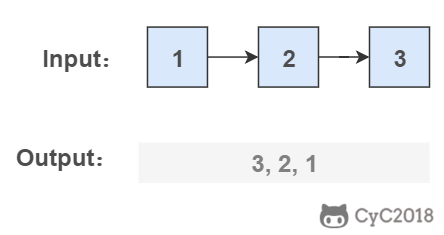
从尾到头反过来打印出每个结点的值。


解题思路

1. 使用递归

要逆序打印链表 1->2->3(3,2,1),可以先逆序打印链表 2->3(3,2),最后再打印第一个节点 1。而链表 2->3 可以看成一个新的链表,要逆序打印该链表可以继续使用求解函数,也就是在求解函数中调用自己,这就是递归函数。

1
2
3
4
5
6
7
8
9
10
11
12
class Solution {
public:
vector<int> data;
vector<int> printListFromTailToHead(ListNode* head) {
if(head != NULL)
{
printListFromTailToHead(head->next);
data.emplace_back(head->val);
}
return data;
}
};

2. 使用头插法

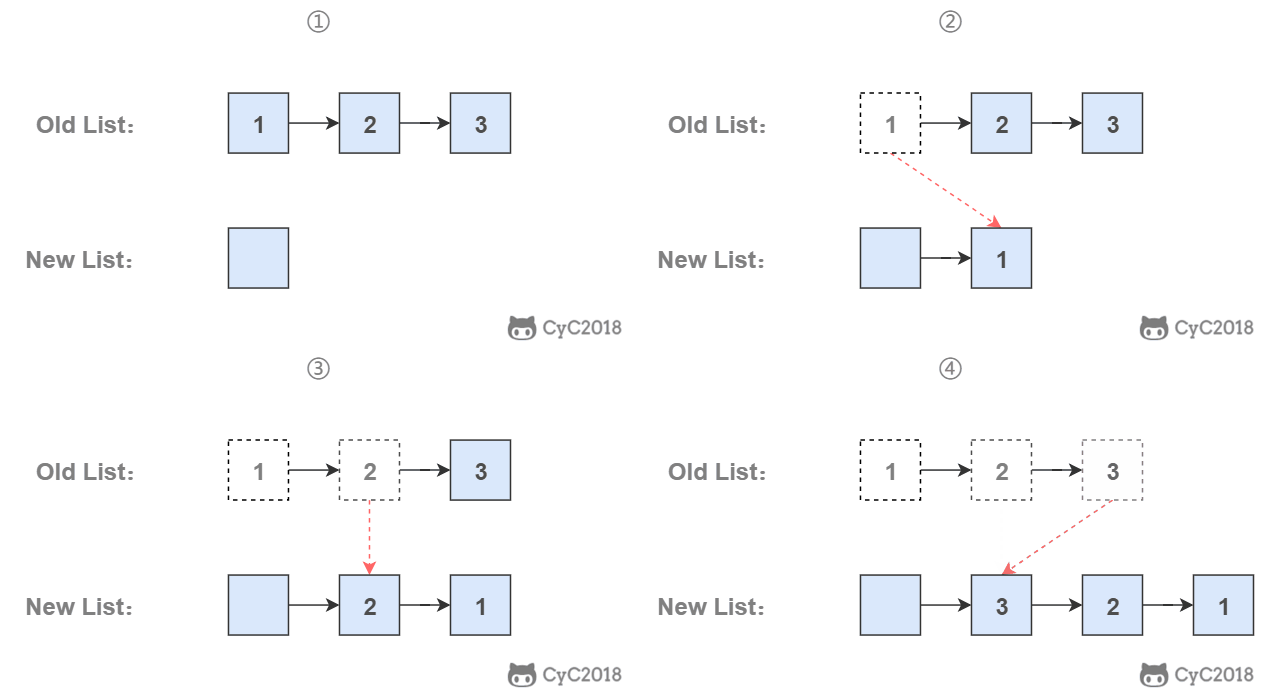
头插法顾名思义是将节点插入到头部:在遍历原始链表时,将当前节点插入新链表的头部,使其成为第一个节点。

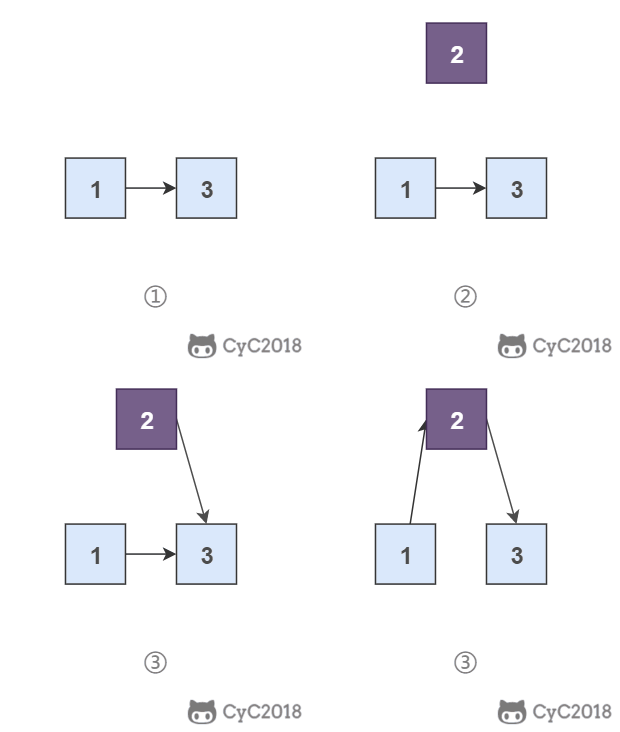
链表的操作需要维护后继关系,例如在某个节点 node1 之后插入一个节点 node2,我们可以通过修改后继关系来实现:

1
2
3
node3 = node1.next;
node2.next = node3;
node1.next = node2;

为了能将一个节点插入头部,我们引入了一个叫头结点的辅助节点,该节点不存储值,只是为了方便进行插入操作。不要将头结点与第一个节点混起来,第一个节点是链表中第一个真正存储值的节点。

1
2
3
4
5
6
7
8
9
10
11
12
13
14
15
class Solution {
public:
ListNode* reverseList(ListNode* head) {
ListNode* pPre = nullptr;
ListNode* pCurr = head;
while(pCurr)
{
ListNode* pNext = pCurr->next; //记录当前节点的下一个节点
pCurr->next = pPre; //当前节点指向前一个节点
pPre = pCurr; //前一个节点指向当前
pCurr = pNext;
}
return pPre; //为什么 因为到左后一个节点的时候 pPre正好等于最后一个节点
}
};

3. 使用栈

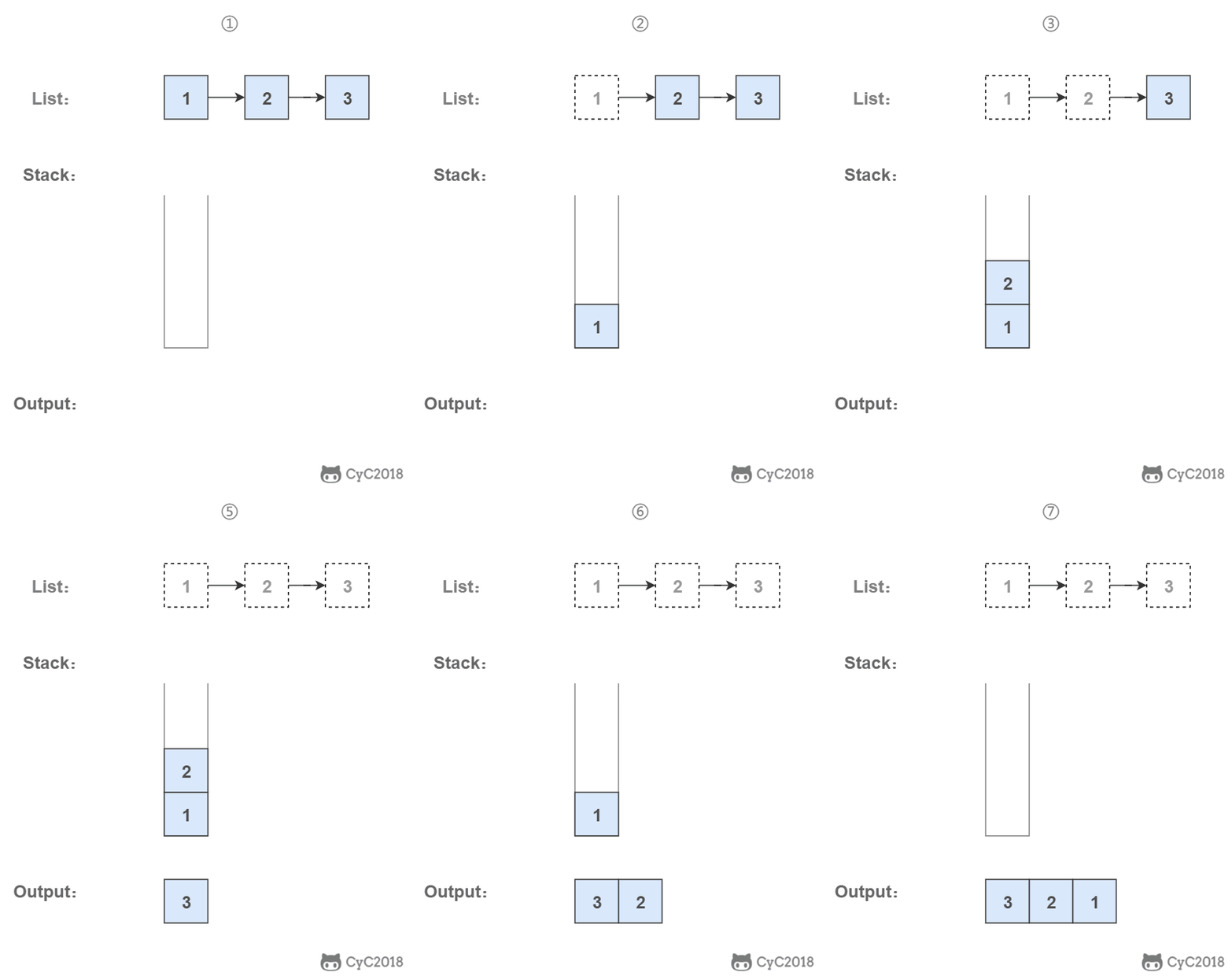
栈具有后进先出的特点,在遍历链表时将值按顺序放入栈中,最后出栈的顺序即为逆序。

1
2
3
4
5
6
7
8
9
10
11
12
13
14
15
16
17
18
19
20
21
class Solution {
public:
ListNode* ReverseList(ListNode* pHead) {
if(!pHead || !pHead->next) return pHead;
ListNode* pList = pHead;
stack<int> tmp;
while(pList)
{
tmp.push(pList->val);
pList = pList->next;
}
pList = pHead;
while(pList)
{
pList->val = tmp.top();
pList = pList->next;
tmp.pop();
}
return pHead;
}
};

java实现

1 使用栈

空间复杂度O(N), 时间复杂度O(N)

1
2
3
4
5
6
7
8
9
10
11
12
13
14
15
16
17
18
19
20
21
22
23
24
25
/**
* Definition for singly-linked list.
* public class ListNode {
* int val;
* ListNode next;
* ListNode(int x) { val = x; }
* }
*/
class Solution {
public int[] reversePrint(ListNode head) {
if(head == null) return new int[]{};
Stack<Integer> stack = new Stack();
ListNode curr = head;
while(curr != null) {
stack.push(curr.val);
curr = curr.next;
}
int[] res = new int[stack.size()];
int i = 0;
while(!stack.empty()) {
res[i++] = stack.pop();
}
return res;
}
}

2 直接使用数组返回

1
2
3
4
5
6
7
8
9
10
11
12
13
14
15
16
17
18
19
20
21
22
23
24
25
26
27
28
29
30
31
/**
* Definition for singly-linked list.
* public class ListNode {
* int val;
* ListNode next;
* ListNode(int x) { val = x; }
* }
*/
class Solution {
public int[] reversePrint(ListNode head) {
// 时间复杂度O(2N) 空间复制度O(N)
if(head == null) return new int[]{};
ListNode curr = head;
// 获取链表长度
int nodeLen = 0;
while(curr != null) {
nodeLen ++;
curr = curr.next;
}

curr = head;
// 初始化返回数组,再遍历链表
int[] res = new int[nodeLen];
int i = nodeLen - 1;
while(curr != null) {
res[i --] = curr.val;
curr = curr.next;
}
return res;
}
}
创作不易,欢迎打赏!
-------------本文结束感谢您的阅读-------------